Cable, curb, box and rope chains in close focus
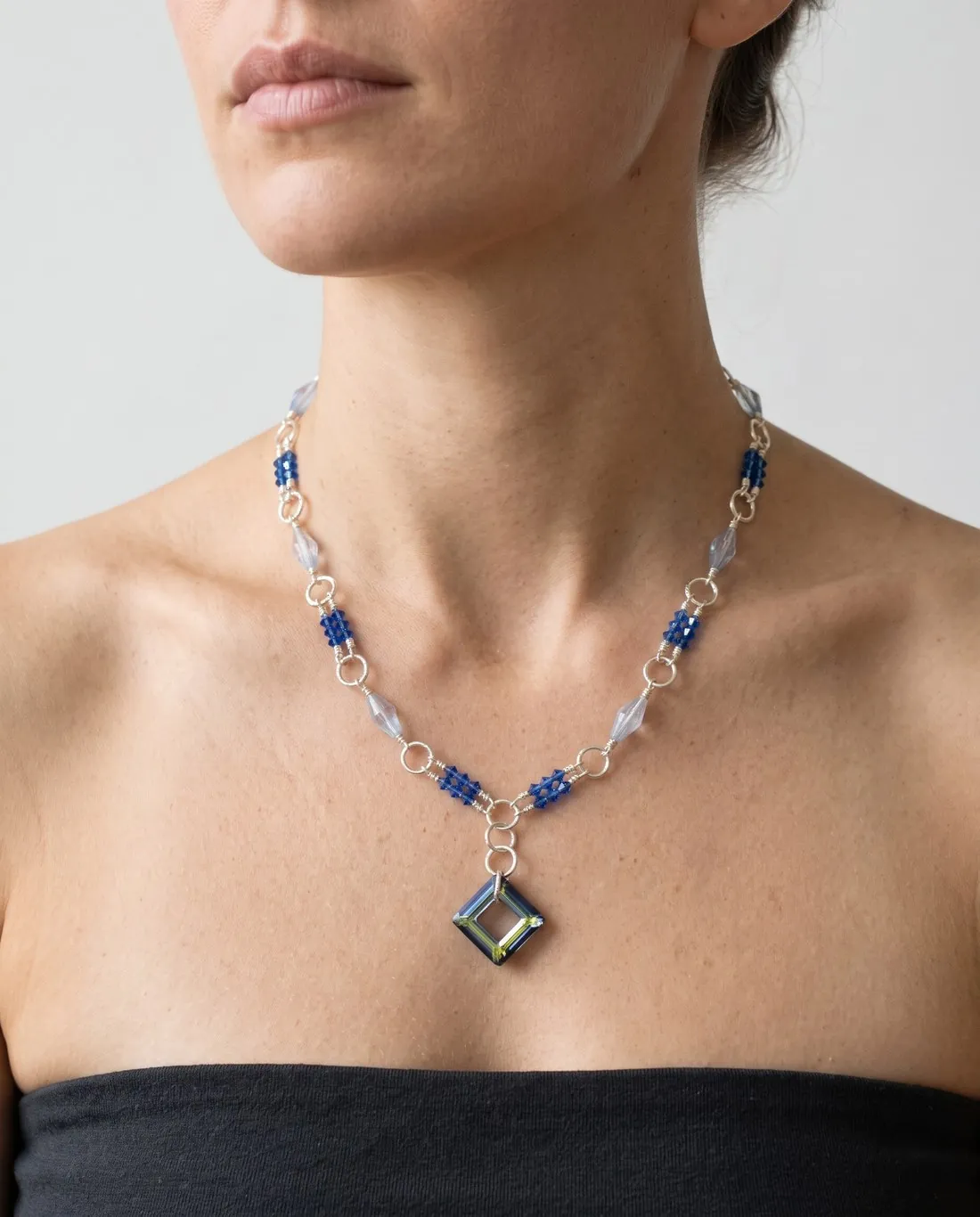
The chain is often what a buyer is choosing: a cable chain of round links, a flat curb chain, a square box chain, a twisted rope, a smooth snake chain or a braided wheat chain. Each catches light differently, and the brief names the chain or link style among the details to keep. In a frame that runs from the lips to the upper chest, the chain is large enough for its pattern to be compared with the real one.
A wheat or rope chain deserves the slowest look, because its braid can flatten into a plain row of links that looks similar at a glance. A snake chain should stay smooth and continuous, with no visible links. Where the chain itself is the selling point, a close-up of a short length, photographed in the same light as the main photo, can be added as a detail image.
Extenders, end discs and the back of the neck
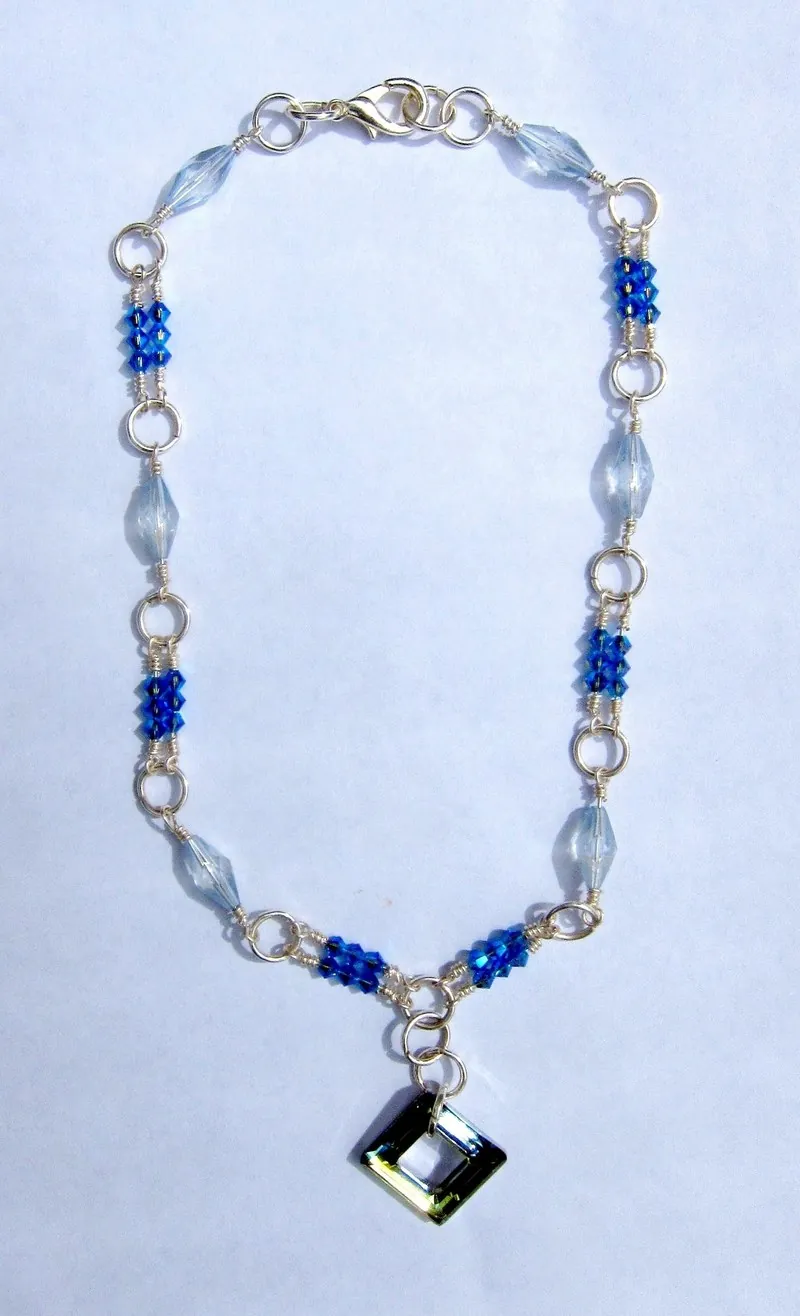
Many necklaces carry parts next to the clasp: an extender chain with a small drop, end caps, a branded disc or a few beads. The brief keeps these together with the clasp at the back of the neck, hidden in a front view, so the portrait shows the chain coming from behind the neck on both sides and falling to the pendant. That is how the piece is worn, even when the flat photo shows those parts beside the pendant.
This shapes the rest of the listing. A branded disc or a hallmark tag next to the clasp will not be visible in the worn image, so a packshot or a close-up has to show it. On a pendant with a bail, check that the chain runs through that bail and nowhere else, and that the pendant hangs face out, centred at the base of the neck rather than turned on its side.
Pearls, bead strands and pendants to count
On a strand of pearls or beads, the brief asks for the same number, colour and placement of every bead or pearl. A front view shows only part of the strand, so the run to compare is the section between the two points where it passes behind the neck. Spacer beads, the knots between pearls and a larger centre bead are the details that show most clearly when something has been added or dropped.
A pendant is the other focal point. Compare its outline, the stones set into it and any engraving on its face, and make sure it hangs from the one chain of the piece; a second short chain or an extra loop leading down to it does not belong to the necklace. Where chain and pendant are made of the same metal, they should show the same colour and finish in the image.