Language: EN
Start free

How do I get photos of my bracelet on a wrist from a product photo?

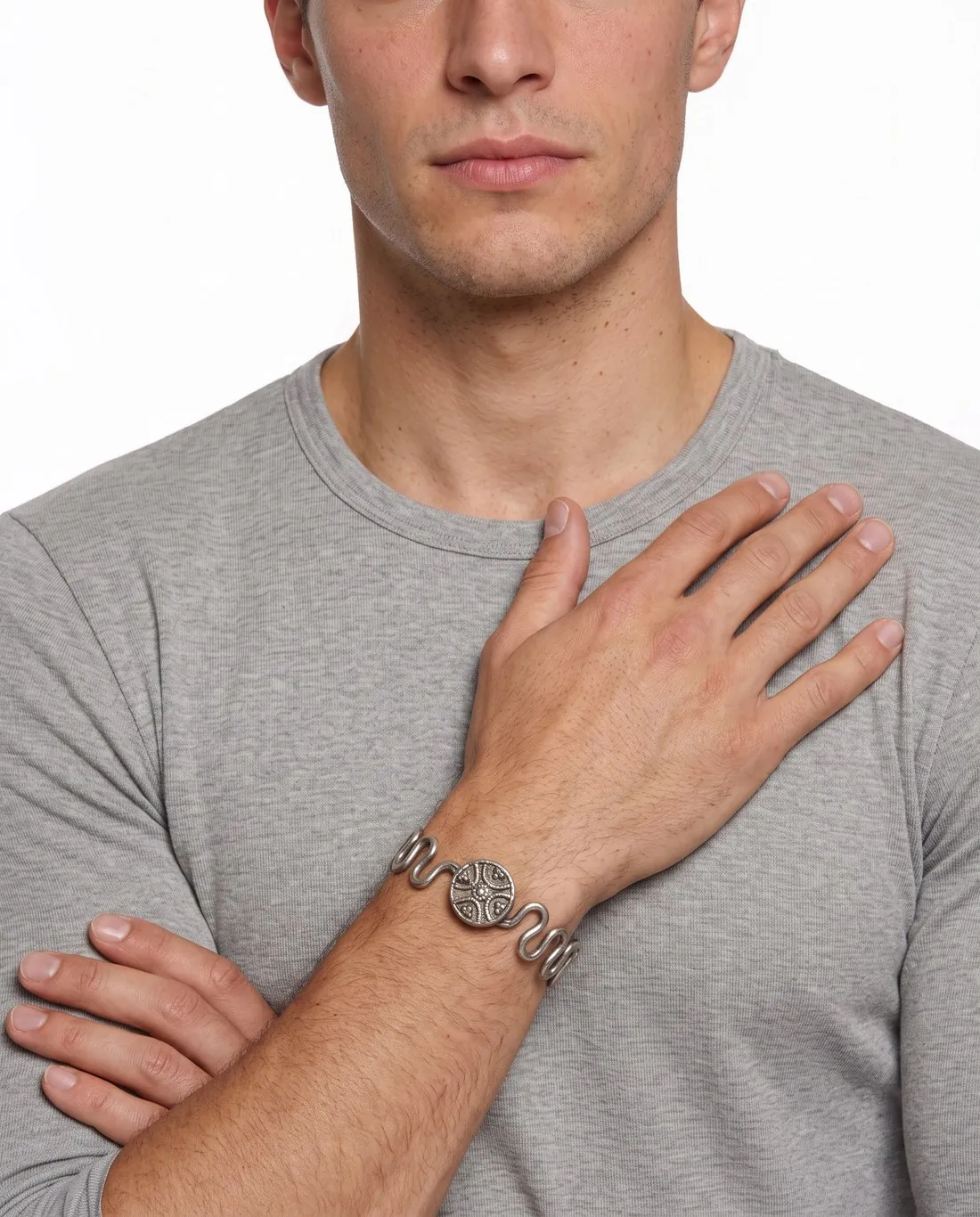
Upload a plain photo of the bracelet to Herofab's Jewelry studio, select bracelet and choose a model. Herofab shows it on the wrist of a forearm crossing the body, the hand on the upper chest and the bracelet turned to the camera, briefed to keep the links, beads, stones and metal colour.

Forearm across the body, wearing the silver wave bracelet with a round central disc · Jewelry studio
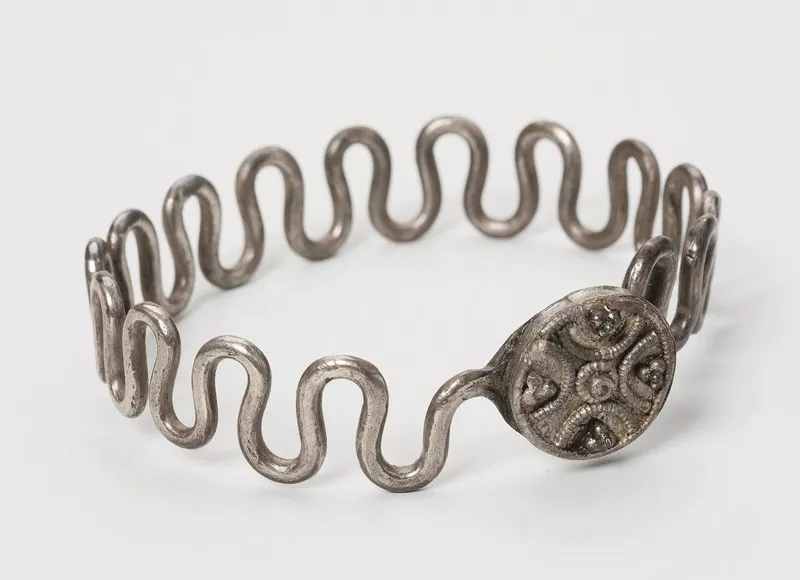
Source photo. Made with Herofab · Jewelry studio
Worth knowing

How the bracelet gets onto a wrist.

  1. 1

    Upload the bracelet on its own

    Photograph the whole bracelet sharp, with the clasp and every charm, bead or stone in view, and upload it to Jewelry studio. Shoot a bangle or a cuff square to the camera, because a steep angle bends round shapes.

  2. 2

    Select bracelet, model and setting

    Choosing the type of piece is required before the job starts, as it sets the frame. Then pick a ready-made model, a model you created or a photo of a model you have permission to use, and a background from studio white to your own image.

  3. 3

    Wrist turned to the camera

    The frame runs from the top of the head to the upper chest. The forearm crosses the body, the hand rests just below the collarbone and the wrist turns so the bracelet faces the camera, with as many bracelets as your photo shows.

Source photo

The bracelet photo a wrist image needs.

  • Lay the bracelet alone on a plain, matte surface, with the whole band and the clasp in the photo and a margin on every side.
  • Photograph a stack together only if it is sold as a set: the model wears as many bracelets or bangles as the photo shows.
  • If one element differs from the rest, such as a charm or a larger bead, keep it sharp in the photo; it is placed on top of the wrist, facing the camera.

Tennis bracelets, bangles, cuffs and chains

A bracelet's construction decides how it sits on a wrist. A tennis bracelet is a flexible line of matching stones in separate settings; a bangle is a rigid closed circle that slides over the hand; a cuff is rigid and open at the back; a chain bracelet drapes and gathers at its lowest point; a bead bracelet on elastic sits close all round. The brief keeps every charm, bead, stone and link in the same number, shape, size, colour and order.

On a wrist turned towards the camera, only the upper half of the band is in view. On a tennis bracelet, that half is where stone size and spacing are compared; on a bangle, the roundness and the edge profile; on a cuff, the width at the centre. A rigid piece should keep its own shape on the wrist instead of bending around it the way a chain does.

Box clasps, lobster clasps and the safety catch

On many bracelets the clasp is part of the design. A tennis bracelet usually closes with a box clasp and a safety catch at the side, a chain bracelet with a lobster clasp or a spring ring, a bead bracelet with a toggle or a magnetic end, and some bangles with a hinge and a push clasp. The jewelry brief keeps the clasp or hook where it is visible, and on a wrist turned to the camera the clasp is often underneath.

When the clasp is a feature, such as a decorative toggle or a branded box clasp, the worn image is not where it will be seen. A close-up of the clasp in the listing carries it instead, and Detail shot can frame the clasp from a delivered image of the bracelet on its own, briefed to keep the shape, the mechanism and the metal colour and finish of the clasp.

Letter beads, charm order and the fit on the wrist

A name or initial bracelet is the strictest test of a worn image. The bracelet brief asks for no charm, letter or symbol to be added, removed or redrawn, yet each letter bead is a small piece of lettering, and lettering this small is the first thing to read in any result. Spell the name from the image, bead by bead, and compare the order of the charms with the flat photo.

Then judge the fit. A bangle hangs a little below the wrist bone with a gap to the skin, a cuff opens at the back of the wrist, and a stretch bracelet sits close all round. The tool takes no measurement of the wrist or of the piece, so the inner diameter or the length belongs in the listing text, and the image is compared with the bracelet worn on a real wrist.

Questions

Bracelet on wrist photos, answered.

Can a stack of bracelets be shown together?

Yes, when they are photographed together: the model wears exactly as many bracelets or bangles as your photo shows, on the same wrist. For a single bracelet, photograph it alone, so the image shows only the piece on sale.

Where does a charm end up on the wrist?

On top of the wrist, facing the camera. When the band repeats one pattern and one element differs, such as a charm, a larger stone or bead or a decorated plate, that element is placed where the buyer sees it.

Which backgrounds can a bracelet image have?

Studio white or studio grey, outdoor, lifestyle, a location, the background of the model photo you uploaded, or your own image. The image comes in 2K or 4K and downloads in the offered marketplace sizes without cropping.

Can a bracelet be shown together with a watch?

Not in Jewelry studio. A bracelet image is briefed to keep the forearm and wrist bare, with no watch and no other jewelry, so the bracelet stays the only piece on the wrist. A watch can be photographed for Product studio's watch setting, which shows the watch alone on a studio background rather than on a wrist.

Is a bracelet for men shown on a man's wrist?

When the model is set to a man, or a male model is created, saved or uploaded with permission, the bracelet is worn on his wrist in the same frame: the forearm across the body and the hand on the upper chest. For a leather, cord or bead bracelet sold to men, the model choice shapes the image as much as the product photo.

How much does it cost?

5 credits per image, plus one credit for 4K. In US dollars that is $0.20 to $0.60 per image before tax, from the largest plan to the smallest credit pack. The cost is shown before you generate, and if a job fails the credits are returned. The 20 free credits at sign-up cover 4 images with this tool.

Examples by product
Get started

Your next collection, shot this week.

20 credits at sign-up, no card required. Images made with free credits carry a watermark. Herofab also removes the watermark from those images once credits are purchased.