File names, energy labels and props that hold up a listing
Some faults sit outside the picture. A file name with special characters or umlauts is not accepted, so a German colour word with an umlaut needs plain letters. Energy-efficiency information may not appear in the images at all; it is submitted as data. CMYK files, common in print workflows, are refused as well.
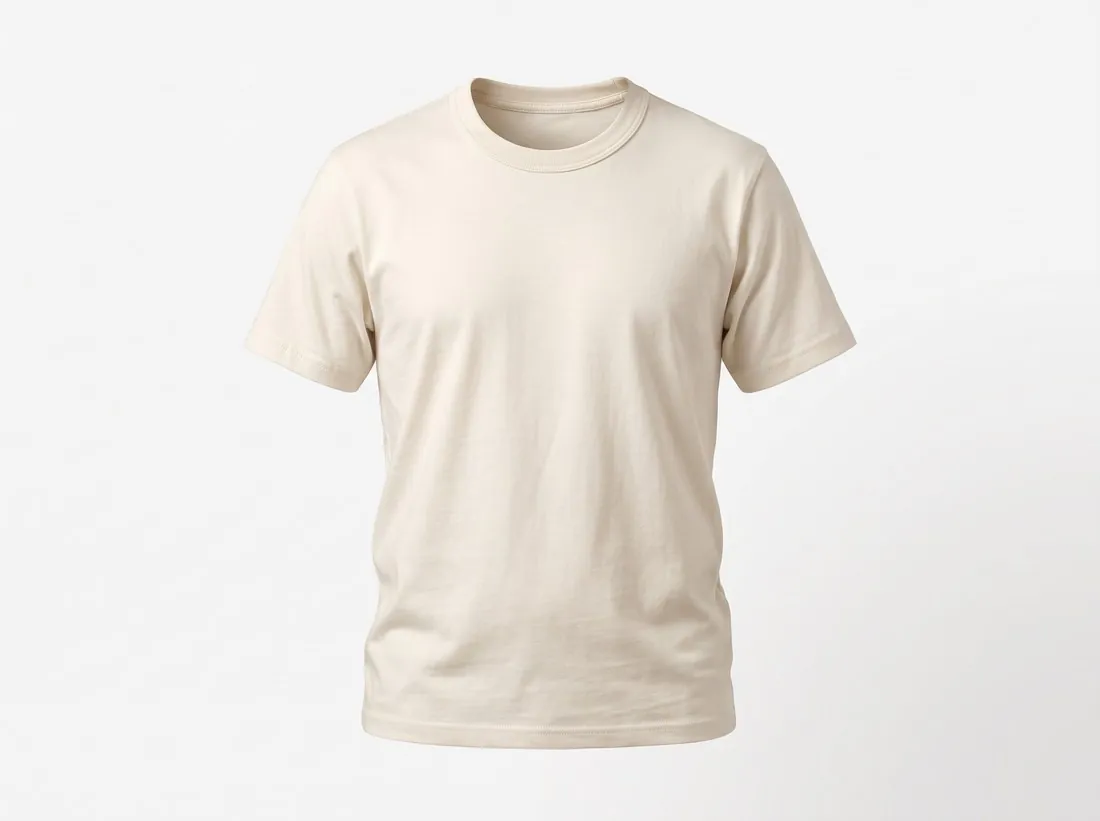
Inside the frame, only the product matching the description, in the matching variant, may be shown, and props are kept few or absent. Where a prop appears, it must be clear that it is not part of the delivery. The product should take up a large share of the image area, which a garment laid small on a wide backdrop does not.
Hollow-body garments, studio objects, no added props
Garments go through Ghost mannequin on white, grey or beige, which the main-image rule accepts as light and neutral. Bags, shoes and other objects take the packshot studio on the same three grounds. Both tools show the product alone: Ghost mannequin removes any hanger or person, and the packshot studio is briefed for no people, hands or mannequins in the frame.
A worn view from Virtual try-on can follow as a further image. The plain clothing that completes such a look is not part of the delivery, so it is made clear, for instance in the product text, that only the listed garment is included. Colour variants supplies per-variant pictures where a colour has not been photographed.
Staying inside the side limit and naming files plainly
Herofab's 2K and 4K output lies inside the maximum side length, but Upscale can reach a long edge far beyond it, so an upscaled file goes out through the download for this marketplace, which fits it into a padded square within the limits. The free resizer does the same in the browser for photos from other sources.
Before upload, each file is renamed with plain letters, digits and hyphens, the product and the view in the name and no umlaut. The free checker for this marketplace tests the light background and the size limits in the browser; the share of the area the garment covers is judged on the result against the fill rule in the table.